


Domestic Exhibition
Past Editions Review
Take a look at the practical electric vehicles at the IEEVChina 2019 auto show (Part 2).
Gorgeous and cool multi-concept designs aren't as good as practical, home-friendly items that cost less.
— Take a look at those practical electric vehicles at the auto show (Part 2)
Every year at China’s major auto shows, companies typically highlight their latest new models or concept cars—especially in the realm of new-energy vehicles, where electric vehicles are leading the charge. With their dazzling designs and cool dashboard decorations, these vehicles invariably draw visitors to linger and stop for extended periods, creating an irresistibly engaging experience.
However, for car owners who genuinely want to buy a vehicle, most people’s primary goal is likely to find a car that’s easy and comfortable to drive. In that case, practicality and the word-of-mouth recommendations from existing owners may well be the best indicators of a car’s quality. This holds true for conventional gasoline-powered vehicles—and even more so for new-energy vehicles, which can significantly reduce usage costs and offer a quick and efficient way to make your car-buying decision.
Next, let's take the current situation as our starting point. China’s largest specialized auto show for new energy and intelligent connected vehicles—the 2019 World Intelligent Connected Vehicle Conference and the 7th China International New Energy and Intelligent Connected Vehicle Exhibition Take several new-energy vehicles as examples and see in which aspects their practical value is reflected.
GAC Toyota iA5
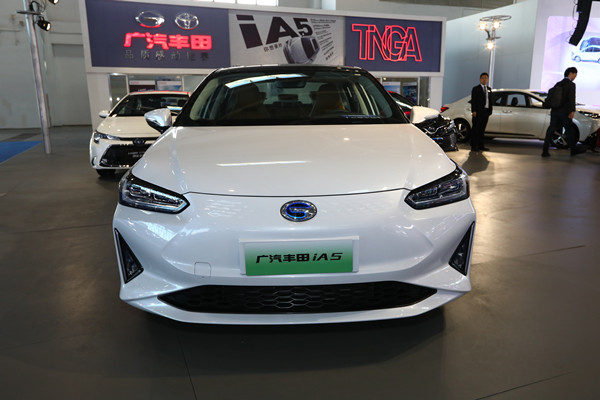
GAC Toyota’s first mass-produced all-electric sedan, the GAC Toyota iA5, is developed on the second-generation GEP dedicated electric platform. It is currently the first joint-venture car brand in China to offer an NEDC combined range of up to 510 km for a pure-electric sedan, and it benefits from GAC Toyota’s outstanding quality control processes and channel services.
The iA5 features a deeply integrated, high-performance “three-in-one” electric drive system, comprising a permanent-magnet synchronous motor manufactured by Nidec of Japan, a high-energy-density battery, and a highly integrated motor controller. It delivers a maximum power output of 135 kW, a peak torque of 300 N.m, a top speed of 156 km/h, and accelerates from 0 to 50 km/h in just 3.5 seconds.
The iA5 is equipped with CATL’s next-generation ternary lithium battery, offering an NEDC pure-electric range of 510 km and a constant-speed pure-electric range of 630 km at 60 km/h. Its energy consumption under combined driving conditions reaches a class-leading 13.1 kWh per 100 km, resulting in a travel cost of less than 0.2 yuan per kilometer. In DC fast-charging mode, the iA5 can charge from 30% to 80% in just 34 minutes, while a full charge via AC slow charging takes only 9.5 hours.
The GAC Toyota iA5 has overall dimensions of 4,792 mm in length, 1,880 mm in width, and 1,530 mm in height, with a wheelbase of 2,750 mm, offering impressive interior space. In terms of exterior design, the iA5 features optimized angles for the front end, windshield, and rear trunk spoiler—a ducktail-style spoiler—while also incorporating aerodynamic components such as a flush underbody guard, air curtains, and air dams. As a result, its drag coefficient is as low as 0.25, delivering class-leading energy efficiency.
GAC Toyota has specially designed the “Enjoy What You Want” value-added service package for the iA5, which includes options such as a low-interest car loan with a minimum down payment of 15%, an 8-year or 150,000-kilometer warranty for the three-electric system, a 4-year or 150,000-kilometer warranty for the entire vehicle, free next-generation smart charging piles, lifetime free software upgrades, lifetime free connected-car data traffic, scheduled maintenance services with door-to-door pickup and delivery, and 24-hour roadside assistance—demonstrating genuine sincerity.
BMW i3
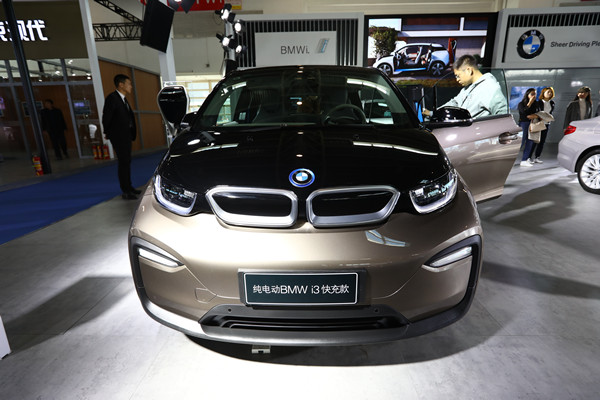
The BMW electric vehicle i3 has a length of only 4,006 mm, making it slightly compact. Yet, its exterior design immediately reveals that it’s a BMW at first glance. BMW’s iconic double-kidney grille is still present—but really, it’s just there in name only, since the entire grille is completely sealed off. Since there’s no need to use the grille for cooling the engine compartment, its symbolic significance far outweighs any practical functionality.
In terms of powertrain, since its launch in November 2013, the i3 has undergone one upgrade: in 2016, its battery capacity was increased from 22 kWh to 33 kWh—a 50% increase. This upgrade maintained the original battery pack’s size and structure unchanged. The all-electric BMW i3 will be equipped with a 22-kWh lithium-ion battery and a single electric motor, delivering a maximum power output of 125 kW (170 hp) and a peak torque of 250 Nm. Its 0-to-100 km/h acceleration time is 7.2 seconds, with a top speed of 150 km/h. When fully charged, it can travel between 130 and 160 kilometers.
SAIC-GM Buick VELITE 6
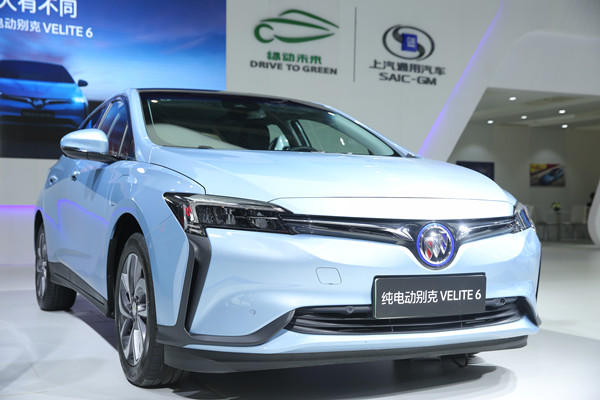
The all-electric MAV under the Buick brand—the Buick VELITE 6 pure electric version—adopts the design concept of a MAV crossover vehicle and is powered by the brand-new eMotion drive technology.
In terms of powertrain, the all-electric Velite6 model is equipped with Buick’s latest eMotion electric drive technology. The drive motor is supplied by Huayu, with a maximum output power of 85 kW (116 PS) and a rated power of 40 kW (54 PS). Under standard driving conditions, its range is 301 km. The battery pack is a ternary lithium-ion battery provided by SAIC Era Power. This battery pack features advanced battery thermal management technology, employing a layered liquid-cooling system to ensure independent and uniform temperature control for each individual battery cell, thereby guaranteeing superior cycle life and more stable performance.
In terms of interior space, the Buick VELITE 6 pure electric model features an almost completely flat floor in the rear seats, complete with rear air vents. As a station wagon, the new vehicle offers a trunk volume of 455 liters in its standard configuration, which can be expanded to 1,098 liters when the rear seats are folded down.
FAW-Volkswagen e-Golf
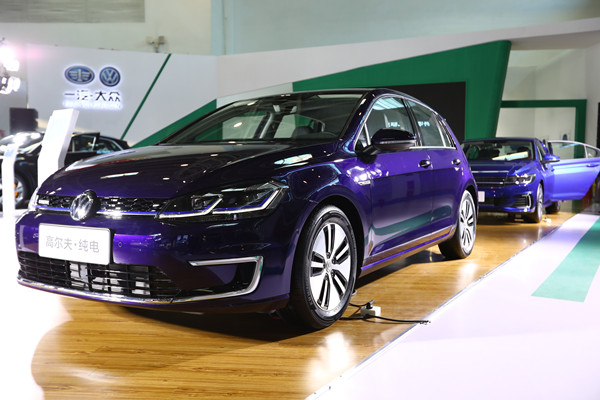
The FAW-Volkswagen domestically produced Golf·Pure Electric (e-Golf) is built on Volkswagen’s MQB platform and has a combined NEDC range of 270 km.
The Golf纯电动 (e-Golf) is available in two models: "Chi" and "Chi Pro." In addition, FAW-Volkswagen has introduced two service packages for the Golf纯电动 (e-Golf), including an 8-year or 200,000-kilometer battery warranty, a 6,000-yuan trade-in subsidy, and free roadside assistance with no limit on the number of calls over a 3-year period—covering virtually the entire lifecycle of the vehicle for consumers.
Compared to the imported model, the domestically produced Golf纯电动 has slightly adjusted body dimensions: 4259 (4267) mm in length, 1799 mm in width, and 1479 mm in height, with a wheelbase of 2631 mm. A new “FAW-Volkswagen” logo has been added to the left side of the vehicle’s rear end.
The charging ports for the domestically produced Golf—both the slow and fast charging types—are designed separately. The slow-charging port is located below the car’s logo at the front, while the fast-charging port is situated on the right rear side of the vehicle. A slow charge takes about 6 hours to fully recharge the battery, whereas a fast charge can replenish 80% of the battery’s capacity in just 40 minutes, and can boost the battery from 30% to 80% in as little as 25 minutes.
In terms of the three-electric system, the Golf Pure Electric is equipped with the APP290 motor and gearbox independently developed by Volkswagen Germany. The motor delivers a maximum power output of 100 kW and a peak torque of 290 Nm, with a transmission efficiency as high as 95%. The Golf Pure Electric accelerates from 0 to 100 km/h in 9.6 seconds and achieves 0-50 km/h acceleration in just 3.4 seconds. It is powered by ternary lithium batteries produced by CATL, with an energy density of 121 Wh/kg and a battery capacity of 37.2 kWh.
Safety is the top concern for electric vehicle owners. The Golf Pure Electric has undergone 184 battery-pack safety tests—including mechanical impact, immersion in water, fire exposure, and vibration—each exceeding international standards. Under charging conditions, it features 10 protective systems to ensure charging safety.
In terms of range, according to the declaration information from the Ministry of Industry and Information Technology, the Golf Pure Electric has a range of 270 kilometers.
Dongfeng Nissan Sylphy·Pure Electric
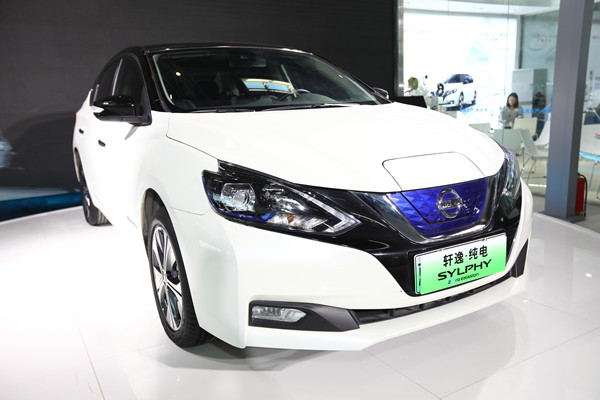
The Dongfeng Nissan Sylphy Pure Electric maintains the same exterior design as the current Sylphy model and is based on a brand-new generation. Nissan Leaf It features all-electric technology and is equipped with a ternary lithium battery pack with a capacity of 38 kWh, offering a combined-cycle range of 338 km.
In terms of powertrain, the new vehicle will be equipped with a permanent-magnet synchronous drive electric motor, model TZ200XS5UR, with a maximum power output of 109 horsepower (80 kilowatts) and a peak torque of 254 Newton-meters. As for the battery, the new vehicle features a high-efficiency ternary lithium battery pack in a slim-cell design, with a total capacity of 38 kWh. According to official data, the vehicle’s combined-cycle range can reach 338 km, while under constant-speed driving at 60 km/h, the range can extend up to 389 km.
The new vehicle supports two charging modes: 50kW DC fast charging and 6.6kW AC slow charging. It takes 8 hours to fully charge using the slow-charging mode, while in fast-charging mode, it can be charged to 80% of its battery capacity in just 45 minutes.
It’s worth noting that the Sylphy Pure Electric comes with services such as an 8-year or 200,000-kilometer battery degradation warranty and a 3-year buyback guarantee offering 55% of the original value.
Editor’s Commentary: The models mentioned above are all mainstream pure electric vehicles produced by joint-venture automakers, which have attracted considerable attention from domestic consumers. The editor’s focus isn’t on detailing each model’s exterior, interior, features, or various technical specifications—in fact, the goal is for consumers and car enthusiasts themselves to go to the respective dealerships and experience these vehicles firsthand. As the saying goes, “You’ll know whether it’s a mule or a horse once you’ve put them to the test.” In other words, only by taking one or two laps in the car can you get a pretty good sense of whether it’s the right fit for you and whether it feels completely natural and effortless to drive.
Phone: 010-83275566 Email: info@ccpitmsc.org
Copyright © 2024 China Council for the Promotion of International Trade, Machinery Industry Branch
 京公网安备11010602202077号
Follow us
Video Account